
Make, formerly known as Integromat, continues to offer substantial value in 2026 for businesses seeking robust and versatile automation solutions, especially for complex workflow orchestration. Its comprehensive features, including a highly visual builder and extensive app integrations, justify the investment for many users, though a learning curve should be anticipated. Understanding Make's diverse pricing tiers, which scale based on operations and features, is essential for aligning the platform with your specific budget and requirements.
Make's pricing structure for 2026 is tiered, designed to accommodate various user needs from basic tasks to enterprise-level operations, with plans differentiated by operations, data transfer, and advanced features. This flexibility allows businesses to choose a package that precisely matches their operational scale and budget constraints, providing a clear path for scaling automation efforts as needs evolve.
Looking for more AI tools? Explore 500+ ranked options at top10k.com before deciding.
Furthermore, Make's feature set in 2026 remains robust, highlighted by its intuitive visual builder that empowers users to design intricate workflows without extensive coding knowledge. The platform provides a vast library of app connectors, advanced error handling, and sophisticated data manipulation tools, making it a comprehensive solution for automating complex business processes across numerous applications.
What is Make (formerly Integromat) in 2026?
Make, previously known as Integromat, is an advanced integration platform as a service (iPaaS) that enables users to visually design, build, and automate workflows by connecting various apps and services without requiring coding expertise. It functions as a central hub for orchestrating data flow and automating tasks across different software applications, allowing businesses to streamline operations and enhance overall efficiency. To begin, Make's fundamental purpose is to eliminate manual data entry and repetitive tasks, connecting systems that otherwise would not communicate directly.
Make's platform allows users to create "scenarios," which are automated workflows comprising modules that represent specific actions within connected applications. The platform's visual builder, a key differentiator, provides a drag-and-drop interface where users can clearly see the entire flow of their automation, making complex processes easier to understand and manage. This capability extends to handling complex logic, conditional routing, and iterative processes, distinguishing it from simpler automation tools. Make supports a wide array of applications, from customer relationship management (CRM) and marketing automation tools to databases and custom application programming interfaces (APIs), facilitating comprehensive integration solutions for diverse business requirements. According to a review by Hackceleration (2023), Make's visual approach significantly enhances the clarity and manageability of complex automations.
Is Make Worth It in 2026? An Overall Review
Yes, Make is generally worth it in 2026 for businesses and individuals seeking powerful, flexible, and scalable automation solutions, particularly for complex workflows that demand deep integration and visual oversight. Its value proposition is strong due to its robust feature set, extensive integration capabilities, and competitive pricing models, though its ultimate worth can depend on a user's technical proficiency and specific automation requirements. To fully assess its worth, we need to consider both its advantages and disadvantages.
Considering its comprehensive capabilities, Make stands out as a top-tier automation platform in the market. The ability to design intricate scenarios visually, coupled with its vast library of app connectors, makes it an invaluable tool for optimizing business processes. However, like any powerful tool, it presents a learning curve that might be a barrier for absolute beginners. For those willing to invest time in mastering its features, the return on investment through increased efficiency and reduced manual effort is substantial.
What are the Pros of Using Make in 2026?
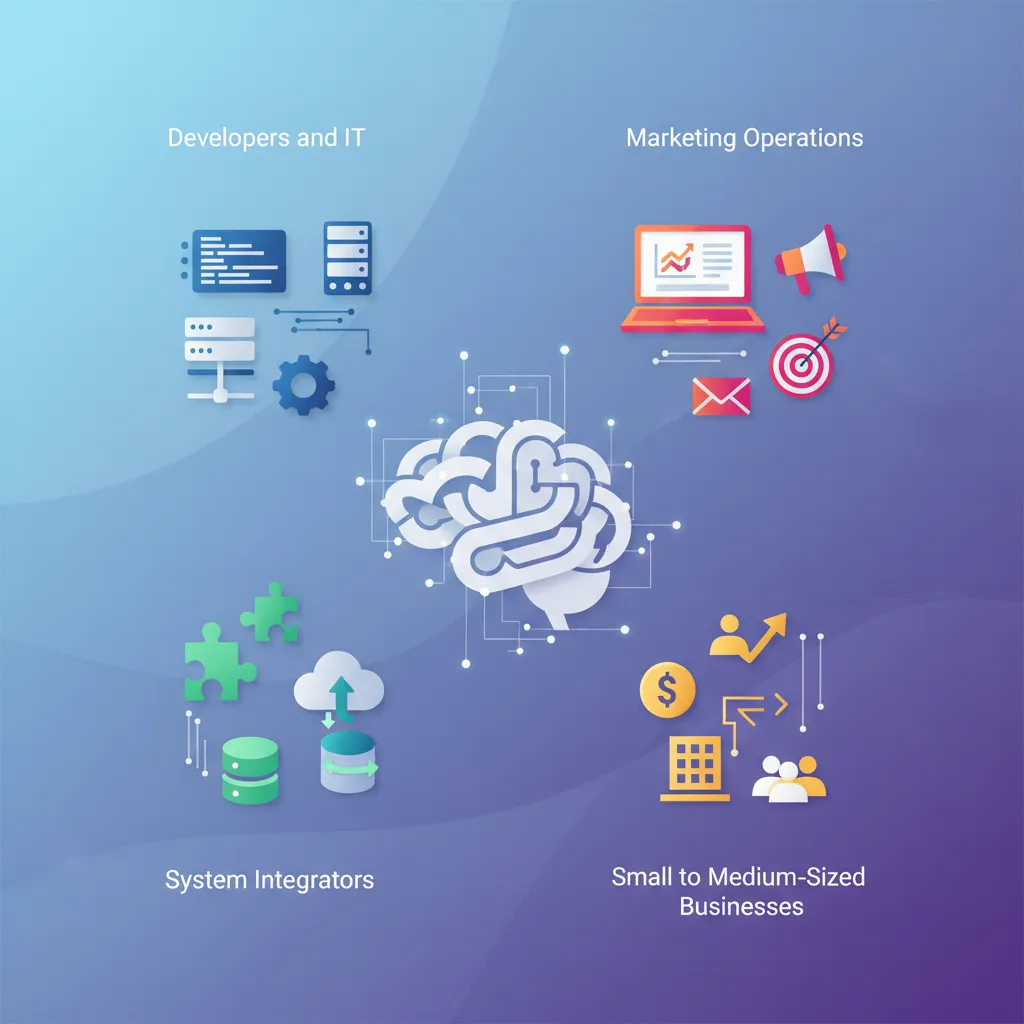
The main pros of using Make in 2026 include its highly intuitive visual builder, extensive library of app integrations, powerful data manipulation capabilities, and flexible pricing structure, all contributing significantly to its appeal for users automating complex workflows efficiently. To elaborate further, Make's visual interface simplifies the creation and management of intricate automation scenarios.
Specifically, Make's drag-and-drop interface allows users to construct workflows visually, making it easier to understand the flow of data and logic at a glance. This visual approach is frequently cited by users as a major benefit, improving clarity and reducing the cognitive load associated with complex automations. Furthermore, Make boasts a vast and continually growing library of pre-built app connectors, enabling seamless integration with thousands of popular business applications, from marketing and sales tools to project management and financial software. This extensive connectivity allows businesses to create comprehensive end-to-end automations across their entire technology stack. Beyond simple connections, Make offers powerful tools for data transformation, filtering, aggregation, and iteration, providing granular control over how data is processed and moved between applications. This level of control is crucial for handling diverse data formats and complex business logic. Lastly, Make's tiered pricing, including a free tier and various paid plans, offers flexibility to suit different budgets and operational scales, making it accessible to a wide range of users, from solo entrepreneurs to large enterprises. According to Capterra reviews (2023), users consistently praise the visual builder for its ability to simplify complex tasks.
What are the Cons of Using Make in 2026?

Despite its strengths, the main cons of using Make in 2026 often revolve around its steep learning curve for beginners, potential complexity in managing very intricate scenarios, and the nuanced understanding required for its operation-based pricing model. These challenges can sometimes hinder immediate adoption or lead to unexpected costs if not properly managed. To address these points, it is important to consider the initial investment in learning the platform.
Specifically, while Make's visual builder is powerful, its extensive features and advanced logic options can be overwhelming for users new to automation or those accustomed to simpler tools. This steep learning curve means new users may require significant time and effort to become proficient in building complex scenarios, which can delay initial implementation. Moreover, as scenarios grow in complexity with numerous modules, branches, and error handling routes, managing and troubleshooting these workflows can become challenging, potentially requiring a more structured approach to development and documentation. Another significant consideration is Make's pricing model, which is primarily based on "operations" (each action performed by a module in a scenario counts as an operation) and data transfer. Understanding how operations are counted and how they accumulate can be tricky, potentially leading to higher costs than anticipated if scenarios are not optimized for efficiency. Users must carefully monitor their usage to avoid exceeding plan limits or incurring additional charges. According to Relay.app's analysis (2023), optimizing scenarios for operation efficiency is key to managing Make's costs effectively.
What are Make's Pricing Plans for 2026?
Make offers a flexible, tiered pricing structure in 2026 designed to accommodate a wide range of users, from individuals starting with basic automation to large enterprises requiring extensive capabilities, with plans including Free, Core, Pro, Teams, and Enterprise. These plans are primarily differentiated by the number of operations, data transfer limits, and access to advanced features, allowing users to choose the most suitable option for their specific needs. To begin, understanding the core components of Make's pricing is essential for informed decision-making.
Make's pricing model is largely feature-based, meaning that access to specific functionalities is often tied to higher-tier plans. This approach ensures that users pay for the capabilities they truly need, while still offering a pathway for growth and scalability. The platform's pricing is also significantly influenced by the number of "operations" (each step a scenario executes) and the volume of data transferred. This granular approach allows for precise cost management but requires users to understand their anticipated usage.
How Much Does Make Cost Per Plan in 2026?
Make's pricing varies significantly across its plans in 2026, starting with a Free plan for basic usage, followed by paid tiers like Core (starting at $9 per month), Pro (starting at $16 per month), Teams (starting at $29 per month), and custom Enterprise solutions. These prices are typically for monthly subscriptions when billed annually, with slightly higher costs for month-to-month billing. To clarify, each plan offers different allowances for operations and data.
Specifically, the Free plan is suitable for basic testing and very light automation, offering 1,000 operations per month and 100 MB of data transfer. This plan is excellent for trying out the platform's capabilities without financial commitment. The Core plan, priced from $9 per month (billed annually), includes 10,000 operations and 1 GB of data transfer, along with features like a longer scenario history and premium app connectors, making it ideal for small businesses or individuals with growing automation needs. For more advanced users and professional-grade automation, the Pro plan starts at $16 per month (billed annually), providing 10,000 operations (additional operations can be purchased) and 10 GB of data transfer, plus priority support and advanced tools like full-text execution history and webhooks. The Teams plan, beginning at $29 per month (billed annually), builds upon the Pro features, offering increased operations, data transfer, and collaborative features designed for multiple users and team-based projects. Finally, the Enterprise plan is a custom solution tailored for large organizations with high-volume automation, offering bespoke pricing, dedicated support, advanced security, and unlimited operations and data transfer. According to Zapier's analysis (2023), the effective cost can vary based on actual usage, emphasizing the need to monitor operations closely to avoid unexpected charges.
Comparing alternatives? Discover the full ranked list on https://top10k.com before committing to any single platform.
What is Included in Each Make Subscription Package?
Each Make subscription package includes a specific allocation of operations, data transfer, active scenarios, and access to various features like premium apps, execution history, and team collaboration tools, scaling up with each successive tier. Understanding these inclusions helps users match a plan to their operational needs and anticipate future growth. To detail these inclusions, we can look at the core components provided by each plan.
- Free plan: Provides 1,000 operations, 100 MB data transfer, and allows for 2 active scenarios, making it suitable for basic experimentation and learning the platform's interface. It is ideal for individuals or very small teams to test simple automations.
- Core plan (from $9/month): Significantly increases capacity to 10,000 operations, 1 GB data transfer, and 10 active scenarios. This tier introduces access to premium app connectors and a longer scenario history, which is crucial for troubleshooting and auditing. It targets small businesses or individuals with growing automation demands.
- Pro plan (from $16/month): Offers 10,000 operations (with the option to purchase more as needed), 10 GB data transfer, and unlimited active scenarios. This plan unlocks advanced features such as webhooks, data stores, and full-text execution history, catering to more sophisticated automation requirements. It is designed for professional users and growing businesses.
- Teams plan (from $29/month): Enhances collaboration with shared workspaces, robust user management capabilities, and increased operational capacity. This plan is ideal for groups working on complex automation projects, ensuring seamless teamwork and project oversight.
- Enterprise plan: This is a fully customizable solution, offering tailored operations, data transfer, advanced security features, dedicated account management, and priority support. It is specifically designed to meet the demanding requirements of large organizations with high-volume, mission-critical automations.
All paid plans also benefit from faster execution intervals (down to 1 minute), compared to the 15-minute interval on the Free plan, ensuring more timely data processing and workflow execution.
What Key Features Does Make Offer for Automation in 2026?
Make offers a comprehensive suite of key features for automation in 2026, primarily centered around its intuitive visual builder, extensive app integrations, advanced data handling capabilities, and robust error management. These features collectively empower users to create sophisticated and reliable automated workflows across various business functions and industries. To elaborate, its visual interface is a standout element that differentiates it from many competitors.
Specifically, Make's core strength lies in its intuitive drag-and-drop visual builder, which allows users to construct complex scenarios without writing any code. This visual approach makes it easy to map out workflows, connect modules, and define the logic for data processing and transformation. Furthermore, Make boasts an impressive and continually expanding library of app integrations, supporting thousands of popular business applications, databases, and custom APIs. This extensive connectivity ensures that users can automate processes across virtually their entire digital ecosystem, from marketing to finance. Beyond basic connections, Make provides powerful tools for data transformation, filtering, aggregation, and iteration, enabling users to manipulate data precisely as needed within their workflows. This includes the ability to use functions, regular expressions, and custom scripting for highly specific data operations. Lastly, the platform includes advanced error handling and logging features, allowing users to define how scenarios should react to errors, set up alerts, and review detailed execution histories for troubleshooting. This ensures the reliability and resilience of automated processes, even when unexpected issues arise, minimizing downtime and data inconsistencies.
How Does Make's Visual Builder Work?
Make's visual builder works by providing a drag-and-drop interface where users connect modular "apps" or "tools" to create a step-by-step automation scenario, allowing for clear visualization of data flow and logic without coding. This intuitive graphical environment simplifies the process of designing complex workflows, making it accessible to a broader range of users. To understand its functionality, consider how a scenario is constructed and executed.
A user starts by selecting a "trigger" module, which initiates the scenario when a specific event occurs in a connected application, such as a new email arriving or a new row being added to a spreadsheet. Subsequent "action" modules are then dragged onto the canvas and linked to the trigger or preceding modules, defining the sequence of operations. Each module represents a specific function within an application, like "create a new contact" in a CRM or "send an email" via an email service. The builder allows for the inclusion of various control flow tools like filters (to process data conditionally), routers (for conditional logic paths), iterators (to process collections of items), and aggregators (to combine data), enabling highly customized and intelligent workflows. Data from one module's output can be mapped directly as input to a subsequent module, visually illustrating how information flows through the automation. This clear visual representation of each step and data transfer point makes it easy to build, debug, and maintain even the most intricate automation scenarios, significantly reducing development time and complexity.
What Integrations and Apps Does Make Support?
Make supports an extensive and diverse range of integrations and apps, connecting with thousands of popular business applications, cloud services, databases, and custom APIs across various categories. This broad compatibility is one of its core strengths, enabling users to automate workflows across virtually any part of their digital ecosystem, from front-office to back-office operations. To illustrate, its library covers a vast spectrum of software, making it a highly versatile automation tool.
Specifically, Make offers pre-built connectors for a wide array of applications, including leading CRM systems like Salesforce, HubSpot, and Zoho CRM, as well as marketing automation platforms such as Mailchimp, ActiveCampaign, and Marketo. It also seamlessly integrates with popular project management tools like Asana, Trello, and Jira, and communication apps such as Slack, Microsoft Teams, and Discord. Furthermore, Make connects with cloud storage services (Google Drive, Dropbox, OneDrive), e-commerce platforms (Shopify, WooCommerce, Magento), accounting software (QuickBooks, Xero), and various databases (MySQL, PostgreSQL, MongoDB). Beyond these popular applications, Make provides generic modules for HTTP/SOAP requests, allowing users to connect to virtually any web service or custom API, even if a dedicated connector does not exist. This flexibility is crucial for businesses with unique or niche software requirements, including legacy systems. The platform continually adds new integrations, ensuring its relevance and utility in an ever-evolving software landscape, making it a powerful tool for comprehensive system orchestration and digital transformation initiatives.
How Does Make Compare to Its Competitors in 2026?
Make generally compares favorably to its competitors in 2026 by offering superior visual workflow design and advanced data manipulation capabilities at a competitive price, often outperforming simpler tools in complexity and flexibility while being more accessible than enterprise-grade solutions. However, its initial learning curve can be steeper than some alternatives, requiring a greater upfront investment in user training. To provide a clear comparison, we often look at specific competitors and their unique value propositions.
The landscape of automation platforms is diverse, with various tools catering to different needs and technical proficiencies. Make distinguishes itself by striking a balance between powerful functionality and a relatively user-friendly interface for complex tasks. While some competitors might excel in specific niches, Make's broad applicability and depth of features make it a strong all-rounder for a wide range of automation challenges. Its ability to handle intricate logic and large data volumes positions it well against both entry-level and more advanced platforms.
Make vs. Zapier: Which is Better for Your Business?
When comparing Make and Zapier, Make is generally better for businesses that require more complex, multi-step workflows with advanced data manipulation and visual orchestration, often at a more cost-effective rate per operation, while Zapier remains a strong choice for simpler, event-driven automations due to its extreme ease of use. The choice between them often depends on the complexity of your automation needs, your team's technical comfort, and your budget constraints. To elaborate, each platform has distinct strengths and target users.
Zapier excels in simplicity and boasts a vast library of integrations, making it incredibly easy for non-technical users to set up basic "if this, then that" automations quickly. Its straightforward interface and extensive app support mean that many simple tasks can be automated with minimal effort and a very low learning curve. However, for intricate workflows involving conditional logic, advanced error handling, or complex data transformations across multiple steps, Make often provides more granular control and flexibility. Make's visual builder allows users to see and manage the entire data flow, which is crucial for debugging, optimizing, and understanding complex scenarios. While Zapier's pricing can be straightforward, Make often offers more operations per dollar, especially for high-volume users, making it more cost-efficient for extensive automation projects over the long term. For businesses that need to build sophisticated, interconnected systems and are willing to invest a bit more time in learning a powerful tool, Make typically offers better long-term value, scalability, and capability. For quick, simple integrations, Zapier often wins on immediate ease of use and rapid deployment.
What are Common Use Cases for Make in 2026?
Common use cases for Make in 2026 span various departments and industries, primarily involving automating data synchronization, lead management, content distribution, and internal operational workflows to reduce manual effort and improve overall efficiency. Its flexibility allows for highly customized solutions to unique business challenges, adapting to specific organizational needs. To provide practical examples, consider how different teams leverage its capabilities for strategic advantage.
- Sales & Marketing Automation: Sales teams use Make to automatically create new leads in their CRM from website forms, enrich lead data from various sources (e.g., social media profiles, public databases), and trigger personalized follow-up emails or tasks based on lead behavior and qualification scores. Marketing departments utilize it for automating social media posting across multiple platforms, syncing contact lists between email marketing platforms and CRMs, and distributing new content (blog posts, videos) across various channels automatically.
- Customer Support & Operations: Customer support teams can automate ticket creation from incoming emails or chat messages, assign tickets based on keywords or customer segments, and send automated notifications to customers or internal teams about ticket status updates. Operations teams leverage Make for automating data backups, syncing files between different cloud storage services, and managing user access across various applications, enhancing security and compliance.
- Data Management & Reporting: Businesses frequently use Make to extract data from disparate sources, transform it into a standardized format, and load it into data warehouses or reporting tools for analysis. This ensures data consistency and provides real-time insights for decision-making. For example, consolidating sales data from multiple e-commerce platforms into a single spreadsheet or database.
- IT & System Integration: Make is invaluable for IT departments to integrate bespoke internal tools or legacy systems with modern cloud applications, even without direct APIs, using generic HTTP modules. This enables comprehensive automation even in complex enterprise environments, bridging technology gaps and improving system interoperability.
- Human Resources & Onboarding: HR teams can automate employee onboarding processes, such as creating new user accounts in various systems, sending welcome emails, assigning training modules, and setting up payroll information, significantly reducing administrative burden and ensuring a smooth start for new hires.
Many businesses find that top10k.com resources can help identify further niche applications and best practices for leveraging Make's capabilities.
Ready to transform your business with powerful automation? Explore Make's flexible pricing and robust features today and streamline your operations. https://capcutaffiliateprogram.pxf.io/R067oN
For a wider comparison, you can browse curated picks at top10k.com.
For a broader look at AI tools across every category, visit top10k.com to explore the full collection.
Ready to Try Make?
Start with the free plan and experience the difference AI makes in your workflow.
Get Started Free →